
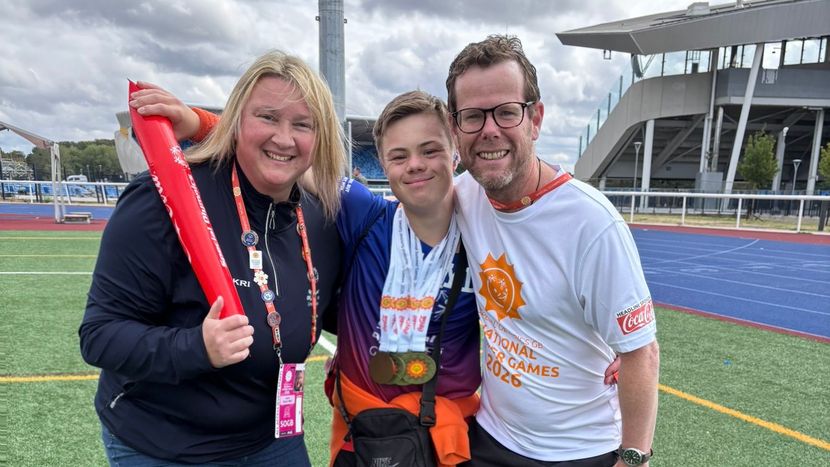
There are moments in leadership when you step back from everything that has happened and realise that you have witnessed something much bigger than the event you set out to deliver. For me, the 2026 National Summer Games was one of those moments.
What made this Games particularly significant was that, from the beginning, we wanted it to be an event for athletes, shaped by athletes and delivered with athletes at its heart.
That may sound simple, but it represents a much bigger shift in how we think about inclusion.
For too long, inclusion has sometimes meant creating opportunities for people to take part in something that someone else has designed. We wanted this Games to demonstrate something different: that athletes with intellectual disabilities should not simply be included in decisions made about them, they should have a meaningful role in making those decisions themselves.
Athletes were involved in decisions about the Games. They helped shape the experience, contributed to how we thought about competition and told us what mattered to them. Their involvement was not limited to the sporting programme. It was there in the opening ceremony, in the way the Games were brought to life and in the many different roles athletes played throughout the event.
For me, that is what genuine inclusion looks like.
It is not simply opening the door and inviting people in. It is making sure they have a voice once they are there. It is recognising their experience, their ideas and their leadership as valuable. And ultimately, it is being prepared to change what you do because you have listened.
Sport can be the starting point, but it can also be a powerful platform for changing how society sees people with intellectual disabilities, and, just as importantly, how people with intellectual disabilities see their own place in society.
When an athlete walks into a stadium in front of thousands of people, competes, leads, speaks, volunteers, makes decisions or simply stands alongside their peers with confidence, they are challenging assumptions about what people with intellectual disabilities can contribute. When families see their sons, daughters, brothers, sisters or friends recognised for their ability rather than defined by their disability, that matters too.
And when organisations, businesses and communities experience that first-hand, it can change the way they think about inclusion in their own environments.
That is the societal impact we should be ambitious about.
Not simply more people participating in sport, important though that is, but more people being seen, heard, trusted and given the opportunity to contribute. More barriers being questioned. More assumptions being challenged. More organisations asking themselves whether the people they exist to serve are genuinely helping to shape what they do.
Watching our athletes compete, support each other and celebrate with their families and coaches was a powerful reminder of why Special Olympics GB exists. But this Games was about more than sport. It was about belonging and possibility.
It was also an important moment in our own journey as an organisation.
Over the last seven years, we have navigated a global pandemic, geopolitical uncertainty, economic and cost-of-living pressures and a changing funding landscape, while undertaking a significant transformation of Special Olympics GB. We are not at the end of that journey, and there is still plenty to do. Transformation has never been about arriving at a finished destination. It is about being prepared to question ourselves, try new things, learn when they do not work as planned and have the courage to change.
The National Summer Games gave us the opportunity to do exactly that.
After nine years, we could have simply recreated the National Summer Games we had delivered before. Instead, we asked what a national event could look like if we designed it around the needs and ambitions of athletes today, while recognising the realities of the world we are operating in.
The result was a very different Games: 1,200 athletes, 15 sports, nine locations and 21 days of competition across Great Britain, culminating at Alexander Stadium in Birmingham. We took a national event and made it more local and accessible. We brought opportunities closer to athletes and their communities and gave athletes the chance to take part in multiple sports if they wanted to.
That matters because accessibility is not simply about whether an event exists. It is about whether people can realistically get there, take part and feel that the opportunity belongs to them.
It also allowed us to work differently with partners and communities. Rather than simply asking organisations to support the Games, we created opportunities for them to bring their people, expertise and ideas into the experience. That creates the possibility of something much more lasting: relationships where inclusion becomes part of how organisations operate, rather than something they support occasionally.
I don't think you can properly describe a Special Olympics event without talking about the people who give their time to make it happen. Our volunteers cared for and welcomed athletes, supported competitions, helped families, solved problems and created the atmosphere that made people feel they belonged. They gave their time, energy and enthusiasm, often giving up weekends, holidays and time with their own families. They did not simply help us deliver the Games. They helped create the experience. They are a huge part of Special Olympics GB, and I am enormously grateful to every one of them.
I also want to recognise our National Office team. What they delivered was extraordinary. They took an idea that looked very different from anything we had done before and turned it into a national programme across multiple locations, while continuing to run the organisation, support our programmes and deliver against everything else that was happening around us. There were difficult moments, plenty of problems to solve and lots of things we had to work out as we went. But the commitment, creativity and determination of the team never wavered. They kept coming back to the same question: what is the best thing we can do for our athletes and volunteers?
They should be incredibly proud of what they delivered. I certainly am.
We also knew that if we were going to bring the Games back, we had to think differently about sustainability. The financial landscape has changed significantly in nine years. Costs are higher, everyone is under greater pressure, public funding is constrained and more charities are competing for a smaller pool of income. There is simply less disposable resource available for an event of this scale. That does not mean lowering our ambition or our standards for athletes. It means being smarter about how we deliver them. Financial sustainability is ultimately about protecting our mission. We have a responsibility to create the best opportunities we can today while making sure that Special Olympics GB is strong enough to continue creating those opportunities for the athletes who come after them.
That is why I am pleased that we were prepared to try something different.
I will remember the athletes walking into Alexander Stadium. The nerves before competition and the celebrations afterwards. Families watching proudly from the stands. Athletes trying something for the first time. Athletes competing in multiple sports. Athletes supporting each other. The determination to get back up when things did not go to plan. I will remember the opening ceremony and seeing athletes not simply being presented with an experience, but helping to create it.
And I will remember our volunteers and our team, who worked incredibly hard to make sure that experience was everything our athletes deserved. But perhaps what stays with me most is what all of this represents.
The National Summer Games showed what can happen when we stop thinking about inclusion as something we do for people and start thinking about it as something we build with them.
It showed that people with intellectual disabilities can be athletes, leaders, decision-makers, contributors, colleagues, volunteers, advocates and role models, not because we have given them permission to be, but because they already are. Our role is to make sure the structures around them do not get in the way.
That is a responsibility for Special Olympics GB, but it is also a challenge to society more broadly.
If we can create environments where athletes are listened to, trusted and given genuine influence in sport, why should that stop at the edge of the playing field? And can we use sport to drive that?
Why should the same principle not apply in workplaces, in education, in communities, in public services and in the decisions that shape people's lives?
We should be building a society where people with intellectual disabilities are not simply included in the world as it is, but are helping to shape the world as it could be.
That is the ambition behind our next chapter.
The National Summer Games has given us more than an event. It has given us new relationships, new ideas, a huge amount of learning and a glimpse of what Special Olympics GB can become.
We are not finished. There is still much to do.
But I believe we have demonstrated something important: when we genuinely put athletes at the centre of our thinking, it does not make our organisation smaller. It makes it bigger, bolder and stronger. And when we give people the opportunity to shape the things that affect them, the impact reaches far beyond the individual.
And perhaps, ultimately, that is the measure of the society we are trying to build, one where people with intellectual disabilities are not just seen, valued and heard, but are recognised as people with something to contribute, something to lead and something to say about the future we all share.
The Games are over, but what they have taught us about where we go next, and the society we want to help create, has only just begun.